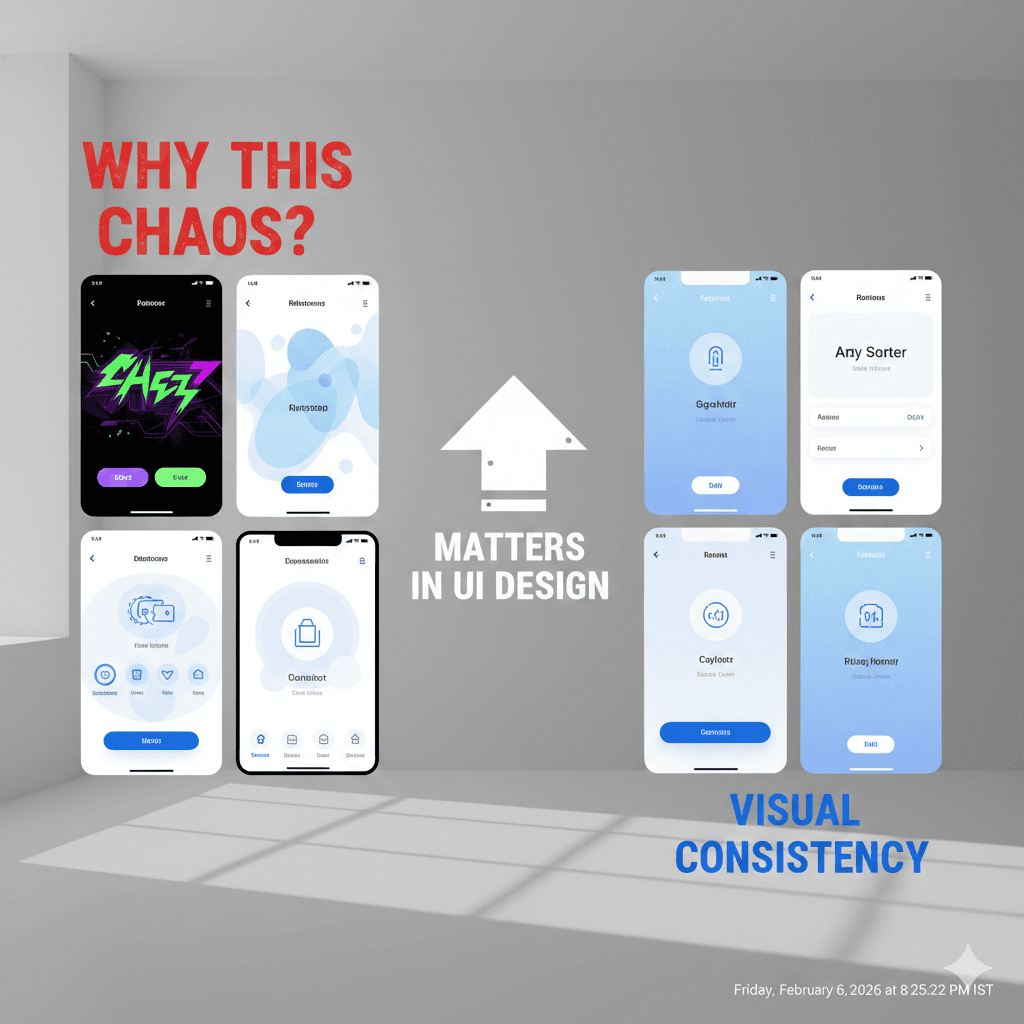
Visual consistency is one of the core pillars of good UI design. It may look like a small detail on the surface, but it deeply affects how users feel when they interact with a product. When everything follows a pattern—colors, fonts, spacing, shapes—users move through the interface without confusion. But the moment these things become inconsistent, the entire experience starts feeling unprofessional and difficult to trust.
Understanding Visual Harmony
A visually consistent interface creates harmony. This harmony is what makes an app or website feel organized and easy to interact with. When a user opens a new screen and sees the same type of button, the same heading style, or the same color pattern, they instantly feel at home. There’s no learning required, no mental pause—just smooth flow.
Consistency also helps the product look cleaner. Instead of every screen having its own personality, all screens work together as one system. This reduces visual noise and helps the most important actions stand out clearly. A well-planned design system makes the product feel stable and trustworthy, even if users can’t explain exactly why.
A product with strong consistency also supports branding. When your primary colors, typography, icons, and grid system follow the same style, users begin to associate this look with your brand. Over time, this recognition creates a strong identity. People remember consistent products because they stand apart from messy and mismatched ones.
Making Design Faster and Smarter
Consistency isn’t only for users—it's also for designers and developers. When a team works with a shared library or design system, it becomes easier to build new pages without starting from zero. Instead of creating new buttons or cards each time, teams reuse existing components. This speeds up the workflow and keeps the entire product aligned.
It also reduces errors. When everyone follows the same rules, the final product becomes much more reliable. Developers don’t guess how a section should look. Designers don’t redo components repeatedly. Everything becomes efficient, clear, and maintainable.
Impact on Usability
Visual consistency directly impacts usability. When elements look different but do the same thing, users get confused. For example, if a “Submit” button is blue on one page and green on another, users hesitate—they don’t know which action is primary. But when all primary actions look identical, users feel confident and take action without thinking twice.
Spacing and alignment also matter. Consistent spacing makes content readable, comfortable, and easy to scan. When spacing changes randomly, the layout feels cluttered and users struggle to focus. This becomes especially important on mobile screens where space is limited and clarity is crucial.
Consistency supports accessibility as well. Predictable layouts help users with limited vision or cognitive difficulties understand where things are. Screen readers also work better when structure remains uniform across pages. Even small patterns like consistent label placement can make a huge difference.
Why Users Notice Even When They Don’t Realize It
Users may not always point out inconsistencies, but they feel them. A design that suddenly changes its style creates friction, even if the user can’t identify the exact reason. Their interaction slows down. Their comfort decreases. They start mistrusting the product without knowing why.
That’s the power of consistency—it builds invisible trust. When the entire interface follows one visual language, users feel guided, supported, and comfortable from start to finish.